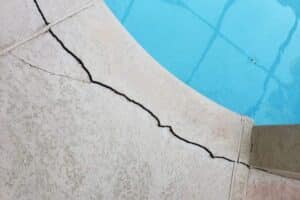
Here’s something most Jacksonville homeowners don’t think about until it’s too late. Your roof is quietly taking a beating every single day. The summer sun drives surface temperatures above 160 degrees. Afternoon thunderstorms pound it from June through September. Hurricane season shows up and reminds everyone that living in Northeast Florida is beautiful, but it comes with a cost.
We’ve seen it countless times. A homeowner schedules a home assessment and we get up on the roof, and there’s soft decking, cracked flashing around a vent pipe, or granules piling up in the gutters like sand at the beach. None of it looked serious from the driveway. By the time water starts showing up on the ceiling, the repair bill has jumped from a few hundred dollars to several thousand.
This guide is for Jacksonville homeowners who want to stay ahead of that. We’ll cover how often you should inspect your roof, what to look for in Florida’s specific climate, what a roof inspection actually involves, typical lifespans for materials used here, and when something is a DIY check versus a “call someone now” situation.
No scare tactics. Just practical information that protects one of your home’s biggest assets.
Why Jacksonville Roofs Age Faster Than Most People Expect
Florida is genuinely hard on roofing materials. It’s not just the storms, though those are a real factor. It’s the combination of heat, UV exposure, humidity, and wind that breaks things down faster than, say, a roof in Ohio or Colorado.
Here’s what your Jacksonville roof is dealing with year-round:
Intense UV and Heat Exposure
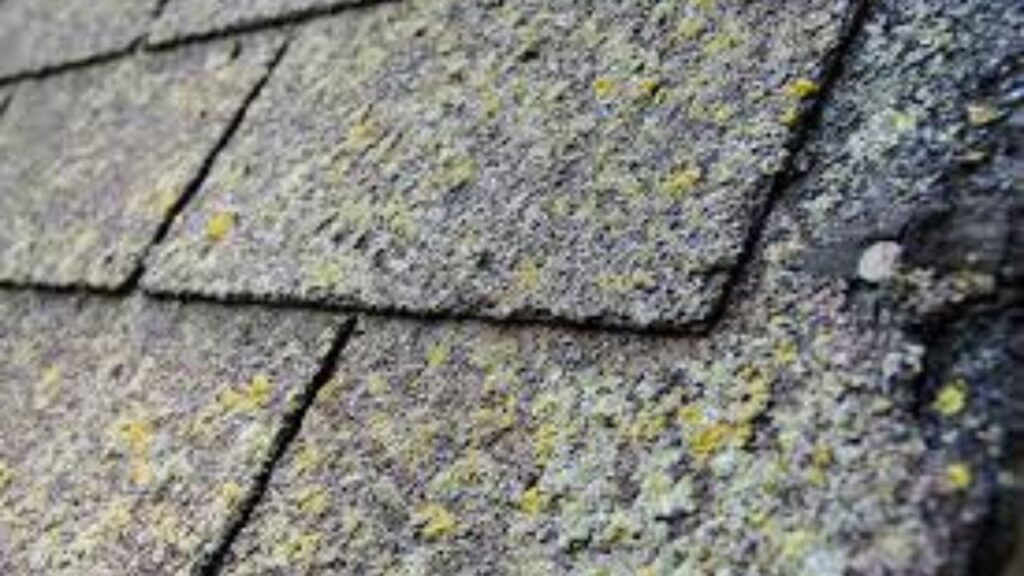
Jacksonville averages over 230 sunny days per year. Asphalt shingles expand and contract with temperature swings, and after years of that cycle, they become brittle and start to crack. The granule coating that protects the asphalt underneath gradually erodes from UV exposure. Once that protective layer thins out, the shingle’s lifespan drops quickly.
Metal roofs handle heat better, but improper installation or low-quality flashing still causes problems at seams and penetrations over time.
Humidity and Moisture Intrusion
Jacksonville’s average humidity sits above 70% for much of the year. That creates a persistent environment for algae, moss, and mold growth on roof surfaces. You’ve probably noticed dark streaking on roofs around town. That’s usually Gloeocapsa magma, a type of algae that feeds on limestone filler in asphalt shingles. It’s not just cosmetic. Left untreated, it degrades shingle material and shortens roof life.
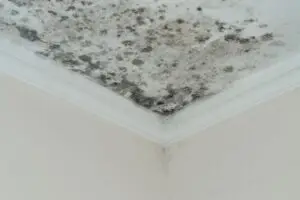
Moisture also finds its way under shingles at any weak point. Cracked caulking around pipe boots, lifted flashing at chimneys and skylights, or a missing piece of ridge cap all become entry points. In a humid climate, once water gets in, it doesn’t leave easily. That’s how you get wood rot in the decking and attic mold that’s expensive to remediate.
Wind and Storm Damage
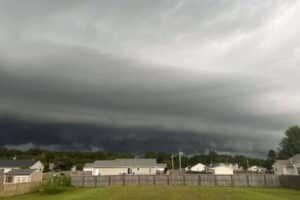
Northeast Florida gets tropical storms and hurricanes. Even storms that don’t make direct landfall push strong winds inland. Wind damage doesn’t always mean missing shingles. Sometimes it’s shingles that lifted slightly and resealed improperly, or flashing that pulled away from a wall just enough to let water in. That kind of damage is easy to miss on a casual driveway inspection.
After any storm with sustained winds above 50 mph, your roof deserves a closer look. We’ll get to what that looks like in a minute.
How Long Does a Roof Last in Jacksonville Florida?
This is one of the most common questions we get, and the honest answer is: it depends on the material, the installation quality, and how well it’s been maintained. That said, here are realistic expectations for Florida’s climate.
Asphalt Shingles (3-Tab)
These are the most common roofing material in Jacksonville neighborhoods, especially on homes built before 2000. In cooler northern climates, a 3-tab shingle roof might last 20 to 25 years. In Florida? Plan on 15 to 18 years with proper maintenance. The UV exposure and heat simply accelerate deterioration.
Architectural / Dimensional Shingles
Thicker and more durable than 3-tab, architectural shingles are the standard on most homes built in the last 15 to 20 years in Jacksonville. They typically last 20 to 25 years in Florida’s climate, sometimes longer with consistent maintenance and good attic ventilation.
Metal Roofing
Standing seam metal roofs are increasingly popular in Jacksonville, particularly in coastal areas like Atlantic Beach, Neptune Beach, and Ponte Vedra. They handle wind and UV exposure significantly better than asphalt. A properly installed metal roof can last 40 to 50 years here. Higher upfront cost, but often the better long-term investment for Florida homeowners.
Tile Roofing
Clay and concrete tile are common in older Jacksonville neighborhoods and in some higher-end communities. The tile itself is extremely durable and can last 50 years or more, but the underlayment beneath it typically needs replacement every 20 to 30 years. Many homeowners with tile roofs are surprised to learn the tile is fine but the underlayment has failed.
What a Proper Roof Inspection Covers
A drive-by look from the street tells you very little. A proper roof inspection gets on the roof and checks the things that actually matter. Here’s what we look at during a home health assessment that includes the roof.
Shingle Condition
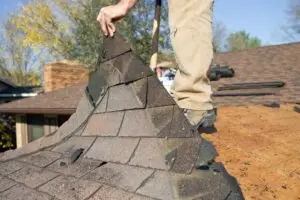
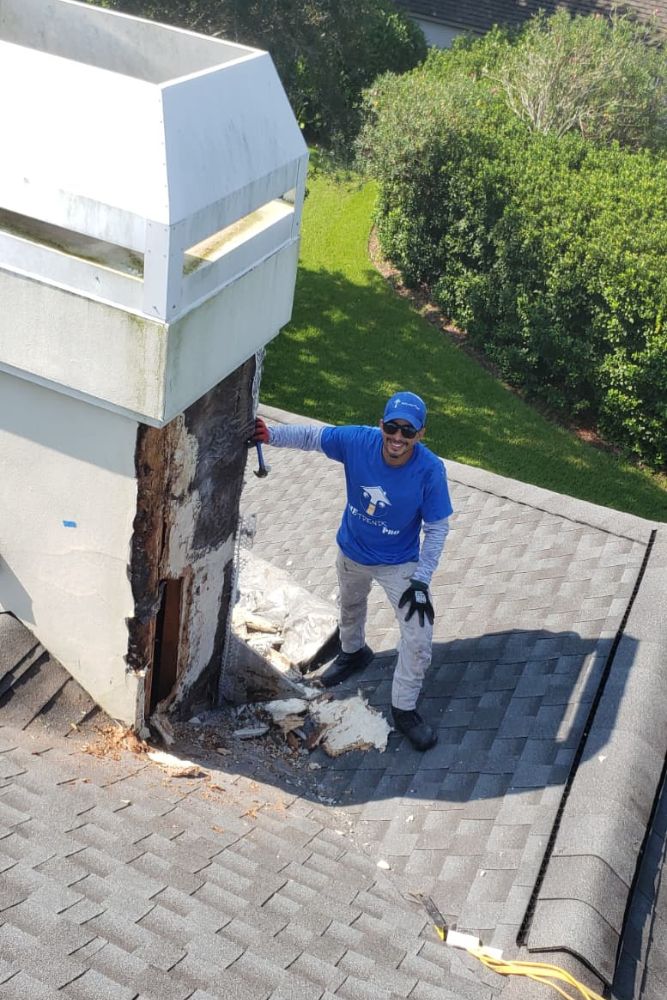
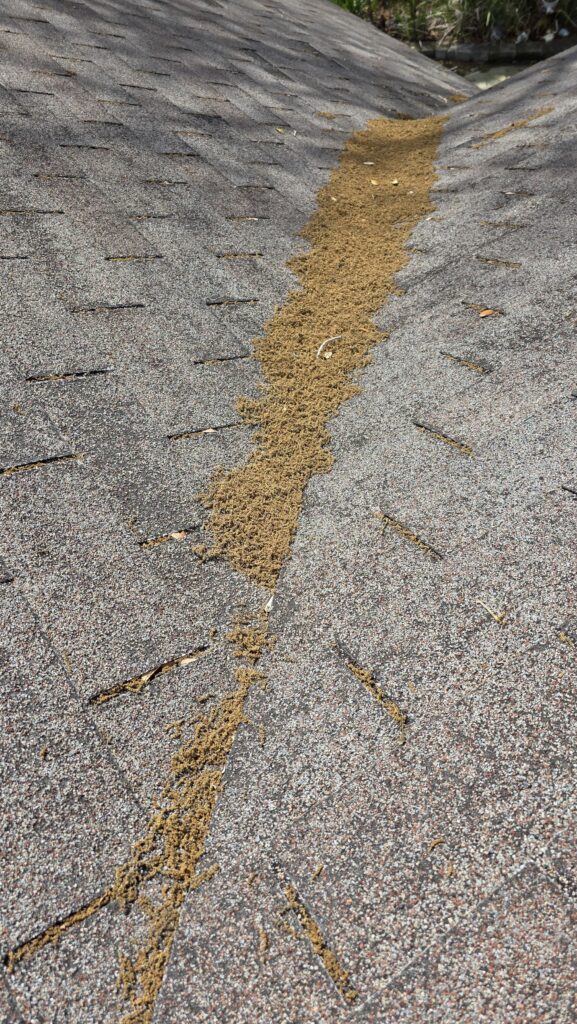
We’re looking for cracking, curling edges, missing granules, blistering, and any shingles that have lifted or are missing entirely. Granule loss shows up in gutters and downspout discharge areas. Heavy granule accumulation in the gutters after a storm is a sign the shingles are nearing the end of their useful life.
Flashing Integrity
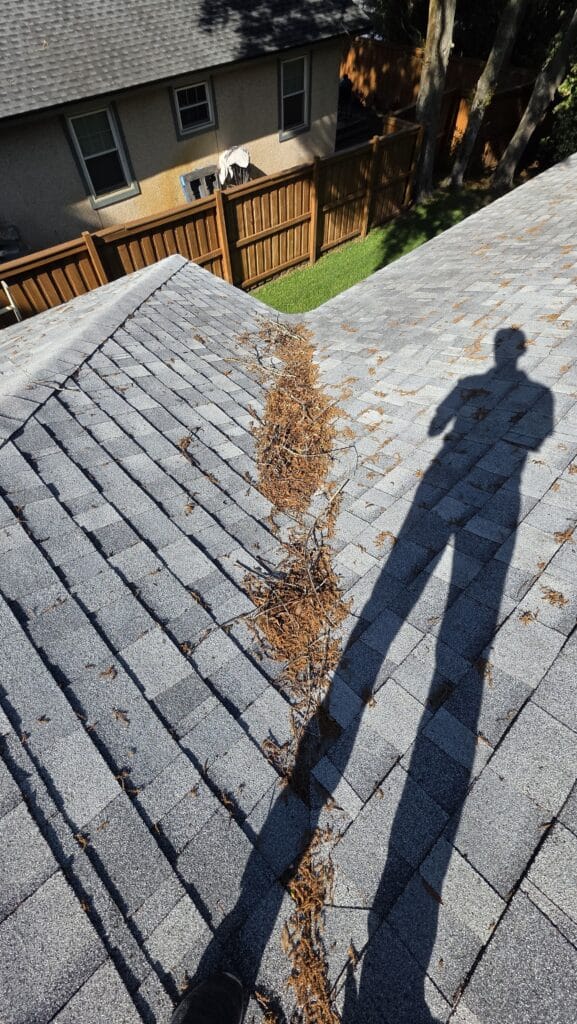
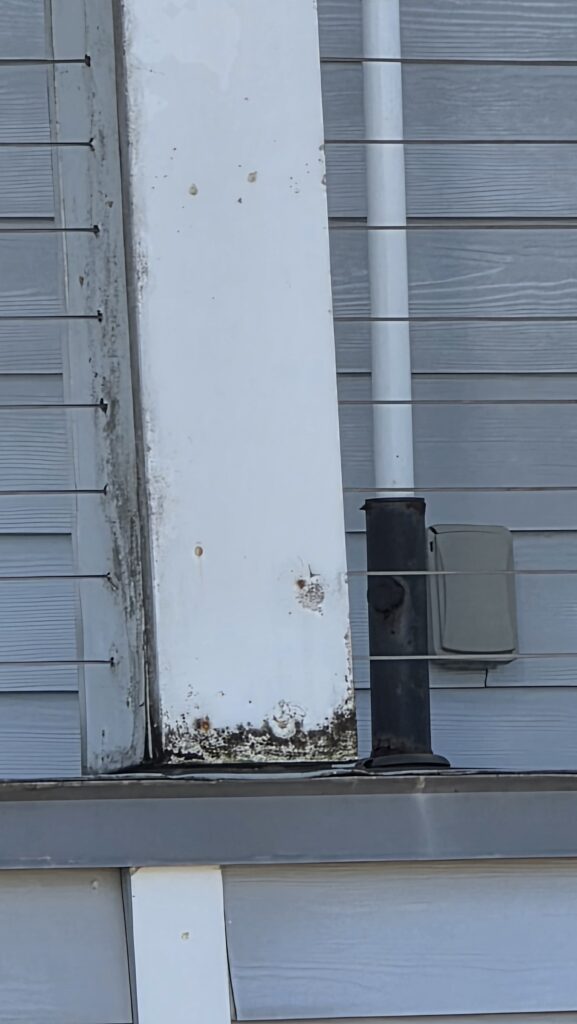
Flashing is the metal sheeting that seals roof penetrations and transitions. This includes chimneys, skylights, vent pipes, and the points where the roof meets a wall or dormer. Flashing failures are one of the most common causes of roof leaks. Caulk around flashing dries out and cracks. Metal flashing corrodes or pulls away from the surface. These are inexpensive to fix early and expensive to deal with after water has been getting in for a season.
Gutters and Drainage
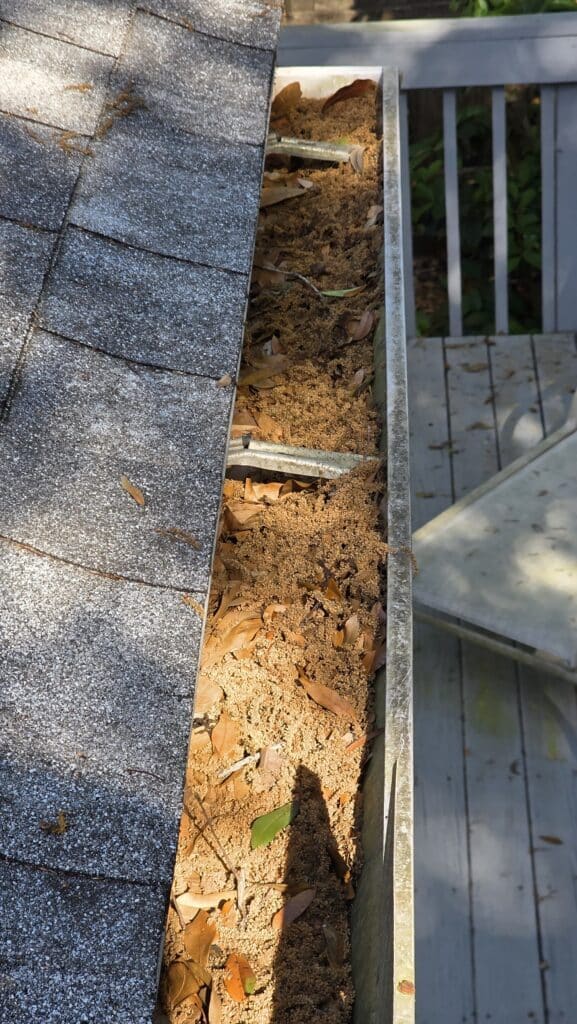
Clogged or improperly pitched gutters cause water to back up under the first course of shingles at the eaves. In Jacksonville, gutters fill up fast from pine needles, oak leaves, and debris from summer storms. We check for proper slope, secure attachment, and whether the downspouts are directing water far enough away from the foundation.
Attic Ventilation and Decking
An overheated attic accelerates shingle deterioration from below. Proper soffit and ridge ventilation keeps the attic temperature closer to outside air temperature, which extends shingle life. We also check the decking (the wood under the shingles) for soft spots, moisture staining, and early signs of rot or mold.
Ridge, Hip, and Valley Condition
The ridge cap runs along the peak of the roof and takes constant wind exposure. Hip and valley areas are where two roof planes meet, which makes them natural water collection points. These areas tend to wear faster than flat sections and deserve specific attention.
Roof Maintenance Tasks Jacksonville Homeowners Should Do Every Year
You don’t need to get on the roof yourself to stay on top of basic maintenance. In fact, for most homeowners, we’d suggest leaving roof walking to professionals. A fall off a ladder or a misstep on a wet shingle is not worth it. But there are things you can do and should schedule regularly.
Clean Your Gutters Twice a Year (Minimum)
In Jacksonville, we’d suggest three times. Spring before storm season, mid-fall after the oaks drop their leaves, and late fall before winter. Clogged gutters are a leading cause of fascia rot and water intrusion at the eaves. It’s a cheap task that prevents expensive repairs.
Trim Overhanging Tree Branches
Jacksonville’s tree canopy is one of its best features, but branches that hang over the roof drop debris, hold moisture against shingles, and can cause serious damage in a storm. Keep branches trimmed back at least six to eight feet from the roof surface.
Treat Algae and Moss Growth
If you see dark streaking or green patches on the roof, address it. There are roof-safe cleaning solutions that won’t void your shingle warranty when applied correctly. Power washing shingles, on the other hand, strips granules and voids most warranties. Low-pressure soft washing with the right solution is the correct approach.
Check After Every Major Storm
After any storm with wind gusts above 50 mph or significant hail, do a visual check from the ground using binoculars if needed. Look for missing shingles, debris impact areas, and anything that looks shifted or out of place. Then have a professional look from the roof itself. Insurance claims for storm damage have strict documentation and timing requirements. Catching damage early matters.
Schedule a Professional Inspection Every Two to Three Years
Most Jacksonville roofing contractors and home inspection services offer standalone roof inspections. Given Florida’s climate, waiting until something is obviously wrong is a costly habit. A professional inspection every two to three years catches developing problems before they become failures.
If you’re a HomeTrends Pro member, your quarterly home tune-up includes a visual roof check and documented condition notes. Our home health assessment covers the roof as part of a full baseline inspection of all major systems.
Signs Your Jacksonville Roof Needs Immediate Attention
Some things can wait a season. Other things cannot. Here’s the short list of situations that need a professional evaluation soon, not eventually.
Water stains on interior ceilings or walls. This is active or recent water intrusion. The source may not be directly above the stain. Water travels along rafters and decking before dripping. Get a professional assessment within a week, not a month.
Visible daylight in the attic. If you can see daylight coming through the roof deck when you’re in the attic, water can get in. Simple as that.
Granules collecting in gutters after normal rain. Some granule loss is normal as shingles age. Heavy granule accumulation from a non-storm rain event means the shingles are significantly degraded.
Sagging roof sections. Any visible sagging or dipping in the roof plane indicates structural issues with the decking or underlying supports. This is serious and needs evaluation immediately.
Missing or visibly lifted shingles after a storm. Even one missing shingle is an open door for water intrusion. Don’t wait for the next rain to find out if it’s a problem.
Flashing that has pulled away from the wall or chimney. If you can see a gap or the flashing is visibly separated, water is likely already getting in during heavy rain.
Roof Repair vs. Full Replacement: How to Think About It
This is where a lot of homeowners get confused, and honestly, where some contractors take advantage. The general rule is this: if the roof is under 15 years old and the damage is localized, repair is usually the right call. If the roof is 18 to 20-plus years old, has widespread granule loss, multiple repair areas, or significant storm damage, replacement often makes more financial sense than patching.
Here’s why. If your shingles are already at 80% of their lifespan and you spend $1,500 repairing storm damage, you’re investing in a roof that needs full replacement in two to four years anyway. In that scenario, filing an insurance claim and putting the payout toward a full replacement often protects you better long term.
Get at least two to three quotes from licensed Jacksonville roofing contractors. Ask each one specifically whether they recommend repair or replacement and why. Their reasoning matters as much as their price.
If you want an independent perspective before making that call, a home health assessment gives you documented condition information with no roofing contractor conflict of interest. We don’t sell roofs. We just tell you what we see. You can learn more about how that works on our pricing page.
Jacksonville-Specific Roof Considerations by Neighborhood
Not all Jacksonville roofs face the same conditions. Where your home sits matters.
Coastal areas (Atlantic Beach, Neptune Beach, Jacksonville Beach, Ponte Vedra). Salt air accelerates corrosion on metal components, including flashing, gutters, and fasteners. Coastal homes also face higher wind exposure. Metal roofing in these areas needs to be specifically rated for salt air environments. Inspect flashing and fasteners more frequently than inland homes.
Older inland neighborhoods (Riverside, Avondale, San Marco, Mandarin). Homes built before 1990 often have original or once-replaced roofs that are approaching or past their useful lifespan. These neighborhoods also have heavy tree canopy, which means more debris accumulation and moss growth risk. If you’re buying or already own a home in these areas that hasn’t had a roof inspection in five or more years, schedule one.
Southside, Nocatee, and newer construction areas. Newer homes generally have architectural shingles in better condition, but installation quality varies significantly between builders. We’ve seen brand-new homes with flashing issues and inadequate attic ventilation. Age doesn’t guarantee condition.
Arlington and older Northside neighborhoods. Many homes in these areas have aging roofs and deferred maintenance. Properties in these areas that have had multiple owners sometimes have undocumented repairs that covered symptoms rather than fixed underlying issues.
What Roof Maintenance Typically Costs in Jacksonville
Being realistic about costs helps homeowners plan rather than panic.
A professional roof inspection in Jacksonville typically runs between $150 and $350 for a standalone inspection, depending on roof size and complexity. Some contractors offer free inspections with the expectation of getting the repair work, which is fine as long as you understand the dynamic.
Gutter cleaning for a typical Jacksonville home runs $100 to $250 depending on linear footage and condition.
Minor repairs, like replacing a few shingles, resealing flashing, or replacing a vent boot, generally run $200 to $600. More significant repairs involving decking replacement or larger flashing work can run $800 to $2,500.
Full roof replacement in Jacksonville for a typical 1,800 to 2,400 square foot home runs roughly $8,000 to $18,000 for asphalt shingles, depending on pitch, complexity, and current material costs. Metal roofing runs higher, often $15,000 to $30,000 or more for the same size home, but with a significantly longer lifespan.
Those are current market ranges. Prices fluctuate with material costs and contractor availability, especially in the months following major storm events.
How HomeTrends Pro Helps You Stay on Top of Your Roof
Most homeowners have no documented history of their roof’s condition. They don’t know when it was last inspected, what repairs were done, or how the condition has changed over time. That lack of documentation creates problems when it comes time to sell, file an insurance claim, or make a replacement decision.
When we complete a home health assessment, the roof is documented with photos, noted condition ratings, and specific observations about any areas of concern. That report goes into your digital home logbook and becomes a baseline we track over time. If we’re managing your home on an ongoing plan, quarterly check-ins include visual roof condition updates that get added to that record.
That documentation matters. It matters for insurance claims. It matters when you list the home for sale. And it matters when a contractor tells you the roof needs full replacement and you want to know if that’s actually true based on documented condition history.
If you want to know where your roof stands, our home health assessment is the right starting point.
Frequently Asked Questions About Roof Maintenance in Jacksonville
How often should I have my roof inspected in Jacksonville?
Every two to three years is a reasonable baseline for most homes. After any significant storm, sooner. If your roof is over 15 years old, annual inspections make sense. The cost of an inspection is small compared to catching a developing problem before it becomes a major repair.
Can I inspect my own roof?
You can do a ground-level visual check with binoculars. Look for missing shingles, visible damage, dark streaking, and debris buildup in gutters. But a proper inspection requires getting on the roof and checking flashing, vents, ridge condition, and decking. That’s worth leaving to someone with the right equipment and experience.
Does homeowner’s insurance cover roof damage in Jacksonville?
It depends on the cause. Most policies cover sudden damage from storms, wind, or hail. They typically don’t cover damage from gradual wear, lack of maintenance, or pre-existing conditions. Florida insurance companies have become increasingly strict about roof age and condition. Documenting your roof’s condition proactively helps you in a claim situation.
What is the dark streaking I see on roofs around Jacksonville?
That’s almost always algae, specifically Gloeocapsa magma. It’s extremely common in Florida’s humid climate. It’s treatable with a low-pressure soft wash using appropriate cleaning solutions. Don’t power wash shingles. That strips granules and typically voids your shingle warranty.
How do I know if my roof needs repair or full replacement?
Age is the biggest factor. Localized damage on a roof under 15 years old is usually a repair situation. Widespread granule loss, multiple failing areas, or damage on a roof over 18 to 20 years old usually points toward replacement. Get two to three quotes and ask each contractor to explain their reasoning, not just their price.
Does my roof need to be replaced before I sell my home in Jacksonville?
Not necessarily, but condition matters. Buyers here are increasingly aware of roof age because Florida insurance companies often won’t write or renew policies on roofs over 15 to 20 years old. A roof in declining condition will show up in the buyer’s inspection and affect the sale. A pre-listing inspection can help you understand where you stand before you list. We cover that in our pre-listing inspection service.
How long does a roof last in Florida compared to other states?
Typically 20 to 30% shorter than in cooler northern climates, depending on material. Asphalt shingles that might last 25 years in a northern climate often last 15 to 18 years in Jacksonville. The heat, UV exposure, humidity, and storm frequency all accelerate deterioration.
What causes roof leaks in Jacksonville homes?
The most common causes we see are failed flashing around penetrations (pipe boots, chimneys, skylights), lifted or missing shingles after wind events, clogged gutters causing water backup at the eaves, and deteriorated caulking at roof-to-wall transitions. Age-related granule loss that’s left unaddressed is also a frequent contributor.
Is metal roofing worth it in Jacksonville?
For many homeowners, yes. The higher upfront cost is offset by a significantly longer lifespan, better wind resistance, and lower maintenance needs over time. In coastal areas especially, metal roofing performs better against salt air exposure than asphalt. If you’re planning to stay in your home for 15 or more years, it’s worth getting a quote and running the numbers.
Should I be worried about my roof before hurricane season?
Every spring, yes. Any existing weak points, lifted flashing, aged shingles, or compromised vents become vulnerabilities when a major storm hits. Getting a professional roof check done in April or May gives you time to address anything before the June through November season arrives. It’s one of the most cost-effective things you can do as a Jacksonville homeowner.
Know Where Your Roof Stands Before a Storm Finds Out For You
Your roof doesn’t give you many warnings. By the time you see a water stain on the ceiling, the damage is already done. The good news is that most roof problems are predictable and preventable when you’re paying attention on the right schedule.
If you don’t have a documented baseline for your roof’s condition, a home health assessment is the right place to start. We inspect the roof along with every other major system, give you a Home Health Score, and put everything in writing so you have a record you can actually use.
Call us at (904) 441-1777 or book a free consultation online. We serve Jacksonville and surrounding areas including Atlantic Beach, Neptune Beach, Ponte Vedra, Mandarin, Riverside, San Marco, and more.